Mathematics
Our Vision for Mathematics
At Wilbury, we believe that all children can achieve and succeed in mathematics. We have the highest expectations for every pupil and are committed to ensuring that all children develop the knowledge, understanding and confidence needed to become successful mathematicians.
The community we serve experiences high levels of socio-economic disadvantage and has significant numbers of pupils who speak English as an additional language. We believe that these factors should never limit children’s mathematical achievement. Through high-quality teaching, ambitious expectations and carefully designed learning experiences, we ensure that all pupils can access, participate and succeed in mathematics.
Our aim is that every child leaves our school with secure mathematical foundations, a deep understanding of key concepts and the confidence to apply their knowledge flexibly in a range of contexts. Through an ambitious curriculum, high expectations and a commitment to equity and inclusion, we strive to ensure that every pupil experiences success, develops a positive mathematical identity and leaves our schools well prepared for the next stage of their education.
Strong Foundations for All
Strong foundations underpin all aspects of our mathematics curriculum.
We prioritise:
• Secure understanding of number and place value.
• Automatic recall of key number facts.
• Fluency with additive and multiplicative relationships.
• Deep conceptual understanding before procedural efficiency.
• Connections between mathematical concepts.
• Long-term retention of important knowledge and strategies.
We believe that secure foundations enable pupils to access increasingly sophisticated mathematical ideas, promote confidence and reduce barriers to future learning.
Teaching for Mastery
We follow a Teaching for Mastery approach, informed by the work of the NCETM.
Our approach is characterised by:
• High expectations for all pupils.
• Access to the same ambitious curriculum.
• Learning broken down into small, coherent steps.
• Deep understanding of concepts rather than memorisation of procedures.
• Careful attention to mathematical structures, patterns and relationships.
• Continuous opportunities throughout lessons for reasoning, explaining, discussing and problem solving.
• Mathematical thinking made visible through explanation, justification and exploration of different approaches.
• Responsive teaching which ensures pupils keep up with learning.
Teachers use assessment information continuously throughout lessons to identify misconceptions, adapt teaching and ensure pupils are secure in each step of learning before moving on. Reasoning, explanation and problem solving are integral to daily mathematics teaching and learning and are embedded throughout lessons rather than taught as discrete activities or additional challenges.
Teaching and Learning
Teaching for Mastery is supported through a consistent set of evidence-informed teaching and learning walkthrus. These approaches help ensure that all pupils participate, think deeply and make progress in mathematics.
Teachers regularly use:
• I Do, We Do, You Do to provide clear modelling, guided practice and opportunities for independent application.
• Chunking to break learning into small, coherent steps that build understanding incrementally and reduce cognitive overload.
• Talk Partners to ensure all pupils have opportunities to think, discuss, rehearse mathematical language and share their reasoning.
• Cold Calling to promote high levels of participation, maintain engagement and communicate the expectation that all pupils are active learners in mathematics.
• Deliberate Vocabulary Development (DVD) to explicitly teach, revisit and embed mathematical vocabulary, enabling pupils to communicate their thinking with increasing precision and confidence.
These teaching and learning walkthrus support equity and inclusion by ensuring that all pupils are expected and supported to participate, reason, explain and contribute throughout mathematics lessons.
Curriculum Design
The National Curriculum forms the basis of our mathematics curriculum.
White Rose Maths provides the agreed curriculum progression and ensures full coverage of National Curriculum expectations. Learning is carefully sequenced to build understanding over time through small steps.
White Rose Progression Document: Click here
Teachers use professional judgement to adapt lessons to meet the needs of their pupils whilst maintaining the integrity of the mathematical progression.
Developing Deep Mathematical Understanding
Deep understanding lies at the heart of our mathematics curriculum. We want pupils to understand mathematical concepts deeply so that they can make connections, reason effectively and apply their knowledge flexibly in unfamiliar contexts.
Teachers support this by:
• Exploring concepts in depth through carefully sequenced learning.
• Making connections between different areas of mathematics.
• Encouraging pupils to explain, justify and prove their thinking throughout lessons.
• Embedding reasoning as an integral component of mathematics learning rather than a separate activity.
• Using carefully chosen representations to expose mathematical structures and relationships.
• Revisiting key concepts over time to strengthen retention and deepen understanding.
• Providing opportunities for pupils to apply learning in a range of contexts.
• Deliberately teaching precise mathematical vocabulary and creating regular opportunities for pupils to use this language in meaningful mathematical discussions.
• Using sentence stems to scaffold explanation, justification and reasoning, supporting pupils to articulate their thinking clearly and confidently.
Through rich mathematical dialogue and purposeful discussion, pupils develop both conceptual understanding and the ability to communicate their mathematical thinking with increasing precision and confidence.
Representations and Mathematical Structures
Representations play a vital role in developing understanding.
Teachers:
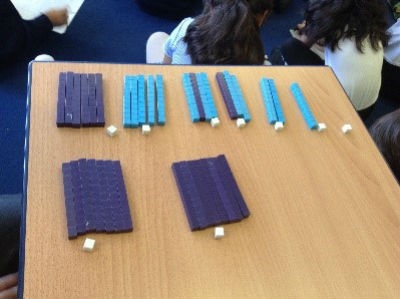
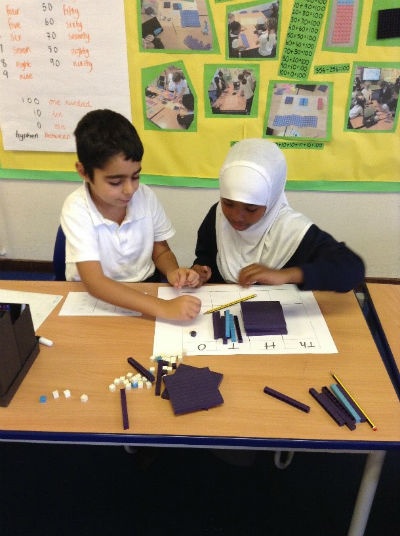
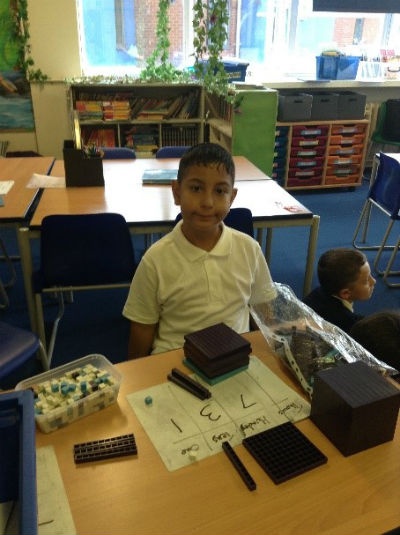
• Carefully select manipulatives and representations to reveal mathematical structures.
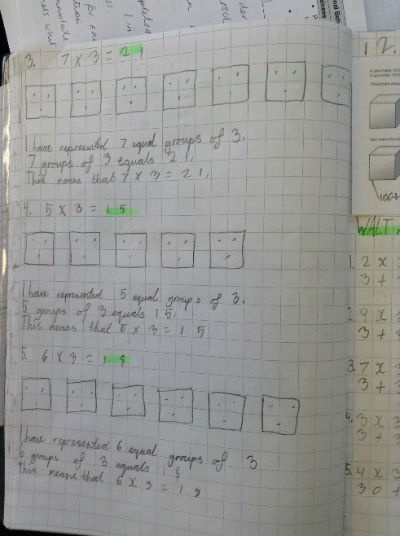
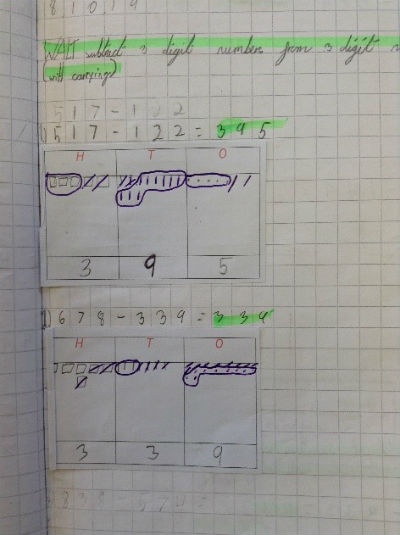
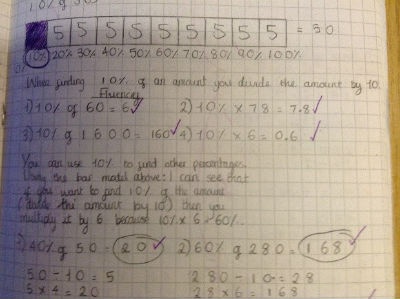
• Make explicit links between concrete, pictorial and abstract representations.
• Use representations consistently to support conceptual understanding.
• Support pupils in recognising patterns, relationships and generalisations.
Representations are used to deepen understanding and help pupils make sense of mathematical concepts.
Oracy in Mathematics
Oracy is central to developing deep mathematical understanding. We believe that pupils learn mathematics more effectively when they are supported to think, reason and communicate using precise mathematical language.
Teachers:
• Explicitly teach and model precise mathematical vocabulary.
• Use sentence stems to support explanation, justification and reasoning.
• Provide frequent opportunities for purposeful mathematical discussion throughout lessons.
• Encourage pupils to articulate, refine and defend their thinking using full mathematical sentences.
• Create inclusive classroom environments where all pupils are expected and supported to contribute.
• Use structured talk to deepen understanding, address misconceptions and strengthen reasoning.
This approach promotes equity and inclusion by ensuring all pupils, including those who speak English as an additional language, have access to the language needed to participate successfully in mathematics. Developing confidence in mathematical communication benefits all learners and supports deeper understanding.
Fluency and Number Sense
Developing fluency is a significant priority across our school and our trust. We believe that fluency is fundamental to equity in mathematics. Secure recall of key facts and efficient use of strategies enable all pupils to access increasingly complex mathematical concepts, reduce cognitive load and participate confidently in mathematical learning.
Fluency is developed through understanding, pattern recognition and making connections rather than through rote memorisation alone. We place a strong emphasis on pupils developing secure number sense alongside automaticity with key number facts and calculation strategies.
In Early Years and Key Stage 1, all pupils participate in NCETM Mastering Number sessions. These short daily lessons develop deep understanding of number, strengthen number sense and build fluency through carefully structured experiences, representations and mathematical discussion.
We have also extended this approach into Key Stage 2 through Mastering Number at KS2, with a particular focus on securing multiplicative understanding and developing automatic recall of multiplication and division facts.
Across all year groups, pupils engage in regular opportunities to rehearse, apply and strengthen key number facts and efficient calculation strategies. We recognise that strong fluency supports confidence, promotes success and enables pupils to engage more fully with reasoning and problem solving.
By prioritising fluency, we aim to ensure that every pupil develops the competence, confidence and flexibility needed to achieve success across all areas of mathematics.
Assessment and Responsive Teaching
Assessment is integral to effective mathematics teaching.
Teachers:
• Use Assessment for Learning strategies throughout lessons.
• Regularly check pupils’ understanding.
• Identify and address misconceptions promptly.
• Adapt teaching in response to pupils’ needs.
• Use timely intervention to support pupils in keeping up with learning.
• Ensure understanding is secure before introducing the next step in learning.
Further information regarding trust-wide assessment processes can be found in the Trust Assessment Policy.
Equity, Inclusion and Participation
Equity and inclusion underpin our approach to mathematics teaching and learning. We believe that all pupils are entitled to an ambitious mathematics curriculum and that, with appropriate support and high expectations, every child can achieve success in mathematics.
Teachers ensure that:
• All pupils work towards the same ambitious learning goals.
• Adaptive teaching removes barriers to participation and learning.
• Scaffolds support access whilst maintaining high expectations and appropriate challenge.
• Scaffolds are gradually reduced and removed as understanding develops and independence increases.
• All pupils are expected and supported to think, reason, communicate and contribute.
• Differences in starting points are recognised and addressed through responsive teaching and timely support.
• Every pupil experiences success and develops confidence as a mathematician.
Through this approach, pupils develop confidence, competence and enjoyment in mathematics. We are committed to ensuring that every child leaves our school as a successful mathematician: equipped with secure mathematical foundations, a positive mathematical identity and the confidence to apply their learning in the next stage of their education and beyond.
What can you do to help your child at home?
As a parent, you can help your child to enjoy maths from an early age. As with all learning, doing it together and making it fun is the most effective way to learn!
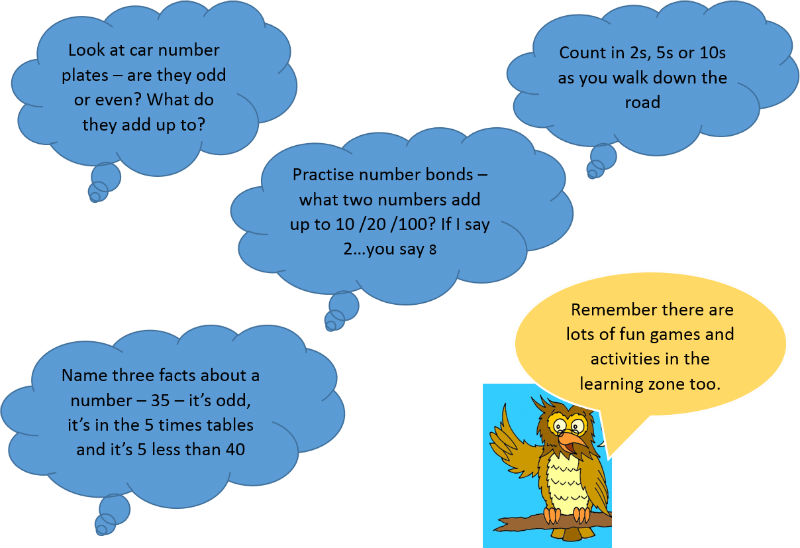
Here are some resources you could use at home:
Race to 100 game
Top Marks Website
IXL Website
Prodigy Maths Website